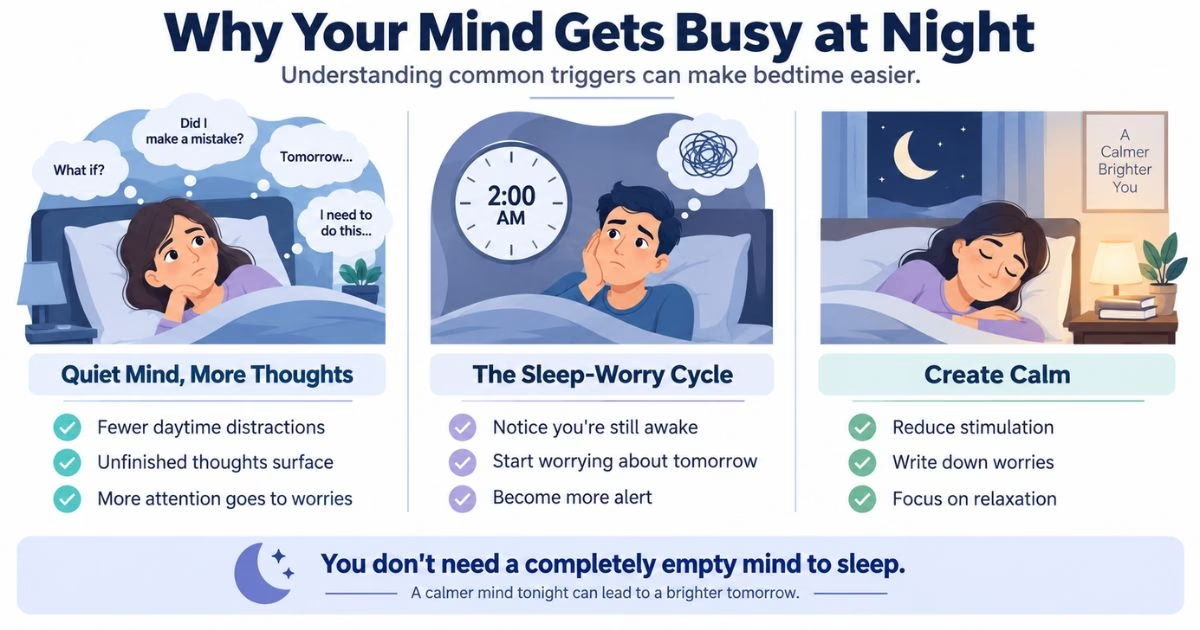
You feel exhausted after a long day, turn off the lights, and settle into bed. Then your mind starts replaying everything that happened. You remember an unfinished task, worry about tomorrow’s responsibilities, or imagine conversations that have not even happened yet. Minutes pass, and sleep feels further away with every thought.
If you regularly struggle with overthinking at night, you know how frustrating it can be. Your body wants rest, but your mind seems determined to keep working.
This often happens because nighttime removes the distractions that occupied your attention throughout the day. When everything becomes quiet, worries that you pushed aside during work, family responsibilities, or daily errands can suddenly feel much louder.
Trying to force yourself to stop thinking rarely helps. In fact, worrying about how quickly you need to fall asleep can create another source of pressure.
The more helpful approach is to change how you respond to your thoughts, give yourself time to process worries before bedtime, and create an environment that supports rest.
In this guide, you will learn ten practical ways to stop overthinking at night and fall asleep more comfortably, including simple exercises you can try tonight and habits that may help over time.
Why Do You Overthink More at Night?
Have you ever noticed that a problem feels manageable during the day but much bigger when you lie down at night?
During the day, your attention is divided among work, conversations, chores, and other responsibilities. You may not have much time to reflect on every concern. Once you are in bed, however, those distractions disappear, leaving more room for your thoughts.
You might start thinking about a mistake you made at work, an uncomfortable conversation, a financial concern, or an important decision you have been avoiding.
Sometimes, your mind is trying to solve a practical problem. At other times, it is revisiting something you cannot change or imagining situations that may never happen.
Several factors can contribute to nighttime overthinking:
- Stress related to work, relationships, money, or family responsibilities.
- Anxiety about future events or uncertainty.
- An irregular sleep schedule or excessive evening stimulation.
- Unfinished tasks that you are afraid of forgetting.
- Frustration about not falling asleep quickly enough.
- A habit of using bedtime as your main opportunity to reflect on the day.
Overthinking and poor sleep can also reinforce each other. Stressful thoughts make it difficult to sleep, while insufficient sleep can leave you more emotionally sensitive and less able to manage stress the next day.
Occasional nighttime overthinking is common. When it happens frequently and interferes with your daily life, however, it deserves more attention.
1. Write Down Your Thoughts Before Going to Bed
One simple way to manage an overactive mind is to get your thoughts out of your head and onto paper.
When you try to remember several responsibilities at once, your brain may keep bringing them back to your attention. You might repeatedly think about an email you need to send, a bill you need to pay, or a conversation you have been postponing.
Writing these things down gives you a place to return to tomorrow instead of repeatedly reviewing them while trying to sleep.
Try a Five-Minute Brain Dump
About 30 minutes before bed, take a notebook and write down whatever is occupying your mind.
Your list might include work tasks, family responsibilities, personal worries, or things you do not want to forget.
Do not worry about writing complete sentences. A simple list is enough.
For example:
- Prepare notes for tomorrow’s meeting.
- Call the dentist to schedule an appointment.
- Reply to an important email.
- Think about how to approach a difficult conversation.
Once you finish, review the list and identify one practical next step for the concerns you can influence.
Instead of repeatedly thinking about an unfinished presentation, you might write, “Review the slides tomorrow morning.”
You have not solved the problem yet, but you have recorded when you will return to it.
Do Not Try to Solve Every Worry
Some concerns cannot be resolved immediately. You may be uncertain about a relationship, worried about someone you care about, or concerned about a situation outside your control.
You do not need to find an answer to every question before going to bed.
Acknowledge the concern, write down anything useful, and allow yourself to return to it when you have more time and energy.
If writing about emotional concerns makes you feel more anxious, keep your evening notes focused on practical tasks instead.
2. Set Aside a Specific Time for Worrying
It may sound unusual to schedule time for worrying, but setting aside a period earlier in the day can help you avoid turning bedtime into an endless problem-solving session.
The idea is not to encourage negative thinking. It is to give your concerns a defined time so they do not have to compete with your need for rest.
Imagine that you are worried about an upcoming job interview. During the evening, you can review likely questions, prepare your clothes, and decide what you need to bring. Once that time is over, you have a plan to follow rather than an unresolved task to rehearse all night.
How to Create a Worry Window
Choose a time in the late afternoon or early evening when you are not rushing between responsibilities.
Spend 10 to 15 minutes identifying what is worrying you.
For each concern, ask yourself:
Can I do something about this?
If the answer is yes, identify one realistic action you can take.
If the answer is no, acknowledge the uncertainty rather than spending the entire evening trying to control it.
For example, you cannot guarantee that another person will agree with your opinion, but you can decide how you want to communicate your thoughts.
When the worry appears again at bedtime, gently remind yourself that you have already considered it and can return to it at the planned time if necessary.
This may take practice. Your thoughts will not always follow your preferred schedule, and that is normal.
The aim is to build a healthier boundary between thinking through problems and allowing yourself to rest.
3. Stop Trying to Force Yourself to Fall Asleep
One of the most frustrating parts of nighttime overthinking is the pressure to fall asleep immediately.
You look at the clock and realize that you have been awake for 20 minutes. You begin calculating how much sleep you have left before your alarm. Then you worry about how tired you will feel tomorrow, which makes it even harder to relax.
This creates a cycle: you worry about sleep, become more alert, and then worry even more because you are still awake.
Change the Way You Think About Bedtime
Instead of telling yourself, “I must fall asleep right now,” try a less demanding thought: “I am giving myself time to rest, and sleep can happen when I become sleepy.”
This does not mean giving up on healthy sleep habits. It means reducing the pressure you place on yourself during a difficult night.
You do not need to monitor every minute or judge your progress by how quickly you fall asleep.
Avoid repeatedly checking the clock. Turn it away if seeing the time makes you anxious.
What If You Remain Awake?
If you have been lying in bed for a while and feel increasingly frustrated, consider getting up and doing something quiet in dim light.
You might read a few pages of a book, listen to gentle music, or sit comfortably without checking your phone.

Return to bed when you feel sleepy again.
This approach is part of stimulus control, a strategy used in cognitive behavioral therapy for insomnia. It helps reduce the association between bed and frustration while strengthening the connection between bed and sleep.
If you regularly struggle to fall asleep, a structured treatment such as cognitive behavioral therapy for insomnia may be more effective than relying on relaxation techniques alone.
4. Practice Slow, Comfortable Breathing
When your mind is busy, your body may carry some of the same tension. Your shoulders might be raised, your jaw clenched, or your breathing quicker than usual.
A simple breathing exercise gives your attention something concrete to follow instead of repeatedly returning to stressful thoughts.
Relaxation techniques can be useful for some people as part of a broader sleep routine, although they are not guaranteed to resolve persistent insomnia.
Try This Two-Minute Exercise
Lie comfortably in bed or sit somewhere quiet before bedtime.
Begin by noticing your natural breathing without trying to change it immediately.
Then follow these steps:
- Breathe in gently through your nose if comfortable.
- Allow your abdomen to expand naturally.
- Breathe out slowly without forcing the air from your lungs.
- If it feels comfortable, let the exhalation last slightly longer than the inhalation.
- Continue for one or two minutes at an easy pace.
You do not need to hold your breath, take unusually deep breaths, or follow a strict counting pattern.
If a thought appears, acknowledge it and gently return your attention to the next breath.
Your mind may wander several times. That is not a failure. You are practicing redirecting your attention rather than preventing every thought from appearing.
If focusing on your breathing makes you uncomfortable or dizzy, stop the exercise and return to normal breathing. You can instead notice the feeling of your feet against the mattress or the sounds around you.
5. Try a Body Scan to Release Physical Tension
Sometimes overthinking continues because your attention remains fixed on problems rather than on what you are physically experiencing.
A body scan is a simple mindfulness exercise that involves noticing different parts of your body one at a time. It can provide a gentle alternative to mentally replaying your day.
How to Practice a Bedtime Body Scan
Get comfortable in bed and allow your arms and legs to rest naturally.
Begin with your feet. Notice sensations such as warmth, pressure, or contact with the bedding.
Gradually move your attention upward through your ankles, calves, knees, thighs, abdomen, chest, hands, shoulders, neck, and face.
Spend a few seconds noticing each area.
If your shoulders feel tight, allow them to soften gently if comfortable. If you notice tension in your forehead, see whether you can relax those muscles without forcing anything.
When your mind returns to a worry, simply bring your attention back to the part of your body you were noticing.
You do not need to scan every part of your body on your first attempt. Begin with your feet, shoulders, and face if that feels easier.
If focusing closely on physical sensations makes you uncomfortable, choose another calming activity instead.
The purpose is not to achieve perfect relaxation. It is to give yourself a quieter, more manageable point of focus.
6. Reduce Phone Use Before Bed
Scrolling through social media can feel like an easy way to unwind after a stressful day. However, it can also introduce more information and emotional stimulation when you are trying to settle down.
You might see someone else’s achievements and begin comparing your life with theirs. A work notification may remind you of an unfinished project. A news headline may trigger new worries just when you were beginning to relax.
Even entertaining content can keep you engaged longer than you intended.
Create a Short Screen-Free Period
Start with the final 20 to 30 minutes before your planned bedtime.
Put your phone aside, silence nonessential notifications, and choose a quiet activity that does not require constant attention.
You could read a physical book, prepare your clothes for the following day, take a warm shower, or listen to gentle music.
If you use your phone to play relaxing sounds, choose the recording beforehand, set a suitable timer, and switch off the screen.
You do not have to eliminate technology completely. The goal is to stop unnecessary scrolling from keeping your attention active or delaying your bedtime.
Avoid Emotionally Intense Content Late at Night
If certain social media accounts, conversations, or news topics tend to trigger worry, consider moving those activities earlier in the day.
You can still stay informed and maintain relationships without exposing yourself to stressful content during the final moments before sleep.
Choose activities that make it easier to transition away from the day’s demands rather than pulling you back into them.
7. Use Guided Imagery to Redirect Your Thoughts
When your mind repeatedly returns to an unpleasant situation, imagining a calm and familiar setting may give your attention something different to follow.
This approach is often called guided imagery or visualization.
You do not need to create a detailed mental picture. A simple scene that feels peaceful or comfortable can be enough to get started.
Imagine a Place Where You Feel Comfortable
Imagine sitting near a quiet lake in the evening.
The water is still, the air feels comfortable, and a light breeze moves through the trees. You hear the gentle sound of leaves and notice the soft colors of the sky.
Spend a few moments exploring the scene.
What can you hear? What does the air feel like? Is the ground beneath you warm or cool?
If another thought interrupts the picture, return to one small detail, such as the sound of the water.
You could choose a different place, too: a quiet garden, a favorite beach, or a comfortable room with rain falling outside the window.
What If Visualization Is Difficult?
Some people find mental pictures easy to create, while others do not visualize clearly. Both experiences are normal.
Instead of trying to see the scene, imagine the idea of being somewhere peaceful. You might focus on the sound of rainfall or the feeling of a comfortable blanket.
A short guided audio recording is another option, provided it feels soothing rather than distracting.
Remember that guided imagery is a relaxation practice, not a guaranteed treatment for insomnia. Use it if you find it comfortable, and switch to another approach if it makes you more alert.
8. Challenge Unhelpful Thoughts Without Arguing With Them
Overthinking often involves treating every thought as if it requires an immediate answer.

You might think, “What if I make a mistake tomorrow?” and spend the next hour imagining everything that could go wrong.
The thought may begin as a possibility but gradually feel like a certainty. This can make a manageable concern seem much larger than it is.
You do not need to force yourself to think positively or convince yourself that nothing bad will happen. Instead, try examining the thought more realistically.
Ask Yourself Three Simple Questions
When a worry appears, pause and consider:
Is this something I know, or something I am predicting?
You may know that you have a meeting tomorrow, but you do not know that it will go badly.
Is there a practical action I can take right now?
If there is, write it down or complete the small step if appropriate. If there is not, you may not need to keep analyzing it at bedtime.
Would I judge a friend this harshly for the same situation?
This question can help you notice when your expectations for yourself are unrealistic.
For example, if you made a small mistake at work, you might be telling yourself that everyone will remember it. A more balanced view is that mistakes happen, and you can correct yours if necessary.
The objective is not to prove that every worry is false. It is to recognize that a thought is not automatically a fact or an emergency.
If this kind of thinking is persistent and difficult to manage, working with a qualified mental health professional may help you develop more effective strategies.
9. Build a Consistent Bedtime Routine
Overthinking is often easier to manage when your evening has a predictable structure.
If you work until the moment you get into bed, your mind may not have enough time to transition away from active tasks.
A bedtime routine creates a boundary between the responsibilities of the day and your opportunity to rest.
Try a Simple 30-Minute Wind-Down
Thirty minutes before bed: Write down tomorrow’s tasks and finish any small preparations that might otherwise distract you.
Twenty minutes before bed: Put your phone aside and take a warm shower or change into comfortable sleepwear.
Ten minutes before bed: Read a few pages of a book, listen to soft music, or spend a few minutes stretching gently.
When you get into bed: Try comfortable breathing or a short body scan if it feels helpful.
You can adjust the timing and activities to suit your schedule. If your evenings are busy, even a shorter routine can be a useful starting point.
The goal is to make the transition to rest more predictable without turning bedtime into another checklist.
Keep Your Sleep Schedule Reasonably Consistent
Most adults need at least seven hours of sleep each night, although individual needs vary.
Try to go to bed and wake up at roughly similar times when possible. Spend time outdoors during daylight hours, and avoid consuming caffeine too late in the day if it affects your sleep.
A comfortable bedroom and consistent schedule support your efforts to relax, but neither guarantees that every night will be easy.
10. Know When to Get Out of Bed and Seek Help
Sometimes the best response to nighttime overthinking is to stop trying to solve it while lying in bed.
If you have been awake for a while and feel increasingly frustrated, get up and move to a quiet place with dim lighting.
Choose an activity that is calm and easy to stop, such as reading a few pages of a book. Avoid bright screens, work messages, or stressful conversations.
Return to bed when you feel sleepy again.
This approach is part of stimulus control, a technique used in cognitive behavioral therapy for insomnia. It is designed to help people rebuild the connection between bed and sleep rather than wakefulness and frustration.
When Is Professional Support Worth Considering?
If racing thoughts keep you awake frequently, you regularly struggle to stay asleep, or tiredness is affecting your work and everyday life, consider speaking with a healthcare professional.
Persistent insomnia is not always resolved by improving bedtime habits alone.
Cognitive behavioral therapy for insomnia (CBT-I) is a structured treatment that helps address the thoughts and behaviors that contribute to long-term sleep problems. It commonly includes strategies for reducing anxiety about sleep, improving sleep habits, and changing patterns that keep insomnia going.
The U.S. National Center for Complementary and Integrative Health explains that CBT-I is strongly recommended for adults with chronic insomnia, while relaxation exercises alone have more limited evidence as a treatment. You can read its overview of mind and body practices for sleep disorders.
If you experience persistent anxiety, panic, or low mood alongside sleep difficulties, professional support may help address both concerns.
Do not rely on alcohol or take extra sleep medication to force yourself to sleep. Medicines and supplements can have side effects or interact with other treatments, so speak with a qualified healthcare professional before using them to manage ongoing sleep problems.
A Simple Plan to Try Tonight
You do not need to practice all ten techniques at once. Start with a few steps that address the problems you experience most often.
Before bedtime: Write down tomorrow’s important tasks and spend a few minutes identifying any concern that needs practical attention.
During your wind-down period: Put your phone aside, reduce unnecessary notifications, and choose a quiet activity such as reading or listening to gentle music.
When you get into bed: Try two minutes of comfortable breathing or a short body scan. If a worry appears, acknowledge it and gently return your attention to the exercise.
If you remain awake and frustrated: Get out of bed and read quietly in dim light. Return when you feel sleepy rather than repeatedly checking the clock.
Repeat the parts that feel helpful and adjust anything that adds pressure. Some techniques may help you feel calmer, but you do not need to measure success by how quickly you fall asleep.
Conclusion: Give Your Mind Permission to Slow Down
Overthinking at night can make sleep feel difficult, especially when you are already tired and worried about the next day.
The most helpful approach is often to stop fighting every thought and create better conditions for rest. Writing down worries, setting aside time to address concerns, reducing phone use, and practicing comfortable breathing can all be useful starting points.
You can also change how you respond to unhelpful thoughts, build a predictable bedtime routine, and avoid remaining in bed for long periods when frustration is increasing.
Choose one or two techniques that feel practical rather than trying to change everything in a single evening. With practice, these habits may help you approach bedtime with less pressure and more confidence.
Remember that occasional overthinking is a normal experience. However, if racing thoughts and sleepless nights become frequent, interfere with your daily life, or occur alongside persistent anxiety, professional support may be worthwhile.
You do not have to solve everything tonight. Sometimes, a helpful first step is simply writing down what is on your mind, allowing yourself to rest, and returning to the problem tomorrow.
1 thought on “How to Stop Overthinking at Night and Fall Asleep”