Best Pillow for Neck Pain: What Type Should You Choose?
Waking up with a stiff neck can make the whole day feel uncomfortable. You may go to bed feeling fine, only to wake up with soreness, tight muscles, or that familiar feeling that you “slept wrong.” While there can be many reasons for neck pain, your pillow is one factor worth looking at because you spend several hours with your head and neck resting on it every night.
The best pillow for neck pain is not necessarily the most expensive pillow or the one with the highest number of reviews. What works well for one person may feel completely wrong for another. Your sleeping position, body shape, mattress firmness, pillow height, and personal comfort all matter.
A good pillow should help keep your head and neck in a comfortable, neutral position while you sleep. It should provide enough support without forcing your neck upward or allowing your head to sink too far down.
So, what type of pillow should you choose? Memory foam, latex, cervical, adjustable, or something else? The answer becomes much easier once you understand what your neck actually needs during sleep.
What Makes a Pillow Good for Neck Pain?
When you sleep, your neck should ideally remain in a relatively neutral position rather than bending sharply forward, backward, or sideways.
Think about your posture when standing. Your head naturally sits above your shoulders. A supportive pillow should help maintain a similar alignment while you are lying down.
A pillow that is too high can push your head forward or tilt it to one side. A pillow that is too low may allow your head to fall backward or leave your neck without enough support.
The right pillow should generally provide:
- Comfortable support for your head and neck
- Appropriate height for your sleeping position
- Enough firmness to prevent excessive sinking
- Pressure relief around sensitive areas
- Good shape retention throughout the night
- Materials that feel comfortable for your temperature preferences
- A washable or removable cover when possible
Comfort matters, too. Even a well-designed orthopedic pillow may not be suitable if its shape or firmness feels uncomfortable to you.
How Your Sleeping Position Affects Pillow Choice
Before buying a new pillow, consider how you normally sleep. Your sleeping position is one of the biggest factors in determining the right pillow height and shape.
Side Sleepers
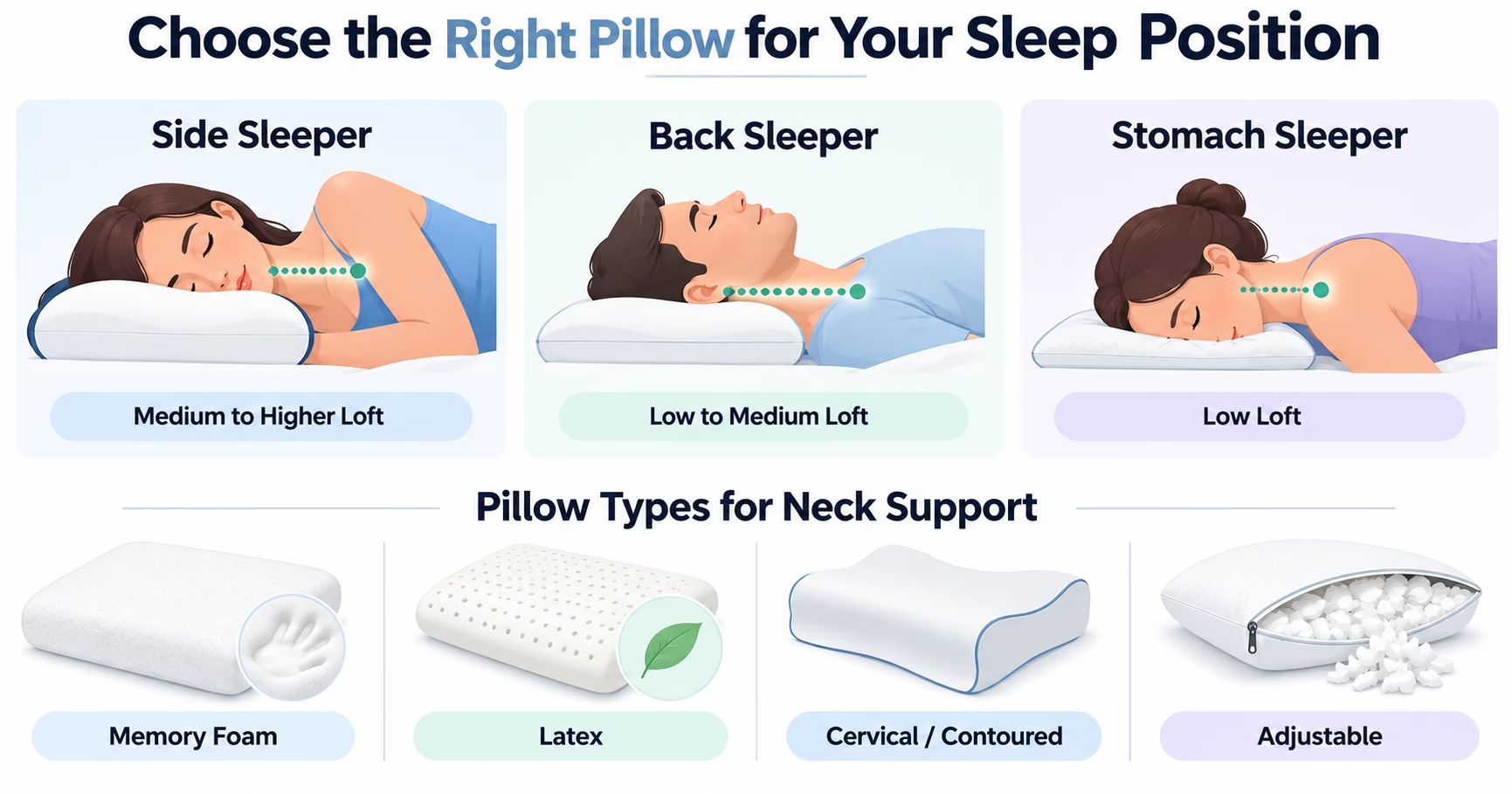
Side sleepers generally need more pillow height than back sleepers because the pillow needs to fill the space between the head and the mattress.
If your pillow is too thin, your head may tilt downward toward the mattress. If it is too thick, your head can be pushed upward.
A good side-sleeping pillow should keep your head roughly aligned with your spine.
People with broader shoulders may need a thicker pillow than people with narrower shoulders. Mattress firmness also matters. A softer mattress allows your shoulder to sink farther into the bed, which can reduce the amount of pillow height you need.
For many side sleepers, a medium-firm memory foam or latex pillow can provide a useful combination of support and pressure relief.
Back Sleepers
Back sleepers usually need a pillow that is lower than what a side sleeper would use.
A pillow that is too tall can push the head forward and place the neck in an uncomfortable position. A pillow with a moderate loft and supportive material may work better.
Cervical pillows can be particularly interesting for back sleepers because their contoured design is intended to support the natural curve of the neck.
However, the shape should feel comfortable rather than forcing your neck into a position that feels unnatural.
Stomach Sleepers
Stomach sleeping can be challenging for the neck because your head usually has to turn to one side so you can breathe.
If you sleep primarily on your stomach, a very thick pillow may increase the amount of neck rotation and extension. A thinner, softer pillow may be more comfortable for some people.
If you frequently wake up with neck discomfort and sleep on your stomach, gradually changing to a side or back sleeping position may be worth considering if it feels comfortable for you.
Memory Foam Pillows for Neck Pain
Memory foam is one of the most popular materials used in pillows designed for support.
The material responds to pressure and body heat, allowing the pillow to contour around your head and neck. This can provide a more stable feeling than traditional soft-fill pillows that compress quickly.
A memory foam pillow may be a good choice if you want:
- Consistent support
- A pillow that maintains its shape
- Contouring around the head and neck
- A medium to firm feel
- Less need to constantly reshape the pillow
There are two common styles: solid memory foam and shredded memory foam.
Solid foam pillows usually provide more consistent support. Shredded foam pillows are generally more adjustable because you can sometimes remove or rearrange the filling.
One potential downside is heat. Traditional memory foam can retain warmth, although many newer pillows use ventilated foam, cooling covers, or other construction methods intended to improve airflow.
Cervical Pillows: Are They Worth Considering?
Cervical pillows are specifically shaped to provide additional support around the neck.
Many have a contoured design with a raised edge for the neck and a lower area for the head. The goal is to help maintain a more neutral position while sleeping.
They can be useful for people who prefer structured support and tend to sleep on their back or side.
However, cervical pillows are not automatically better simply because they are labeled “orthopedic” or “cervical.”
The dimensions need to suit your body and sleeping position. A contour that is too high or too firm may feel uncomfortable.
If you have never used a contoured pillow before, it may take some time to get accustomed to the shape. Look for a product with a reasonable return period when possible so you can determine whether the design actually works for you.
Latex Pillows for Neck Support
Latex pillows are another option worth considering, particularly if you prefer a responsive material.
Unlike memory foam, latex tends to feel springier. It usually responds quickly when you change positions instead of slowly molding around your head.
Latex can provide a combination of support and pressure relief without the deep sinking sensation some people experience with memory foam.
It can also be a good option for people who move around during the night and want their pillow to recover its shape quickly.
The feel varies considerably between products, so pay attention to the pillow’s firmness and construction rather than choosing based on the word “latex” alone.
Adjustable Pillows Can Be a Smart Choice
If you’re unsure what pillow height you need, an adjustable pillow may be one of the most practical options.
Adjustable pillows often contain shredded memory foam, latex pieces, fiber filling, or another removable material. You can add or remove filling to change the pillow’s height and firmness.

This can be especially useful if you switch between sleeping positions.
For example, you might prefer a slightly higher pillow when sleeping on your side but a lower one when sleeping on your back. Instead of buying two completely different pillows, an adjustable design may allow you to find a middle ground.
Adjustable pillows are also useful when you are replacing an old pillow but aren’t sure whether your ideal height is low, medium, or high.
What Pillow Height Is Best for Neck Pain?
There isn’t one universal pillow height that works for everyone.
Your ideal height depends on factors such as:
- Sleeping position
- Shoulder width
- Body size
- Mattress firmness
- Head size
- Personal comfort
- Whether you change positions during sleep
Rather than choosing a pillow based only on a measurement printed on the packaging, focus on alignment.
When lying on your side, your head should not noticeably tilt toward the mattress or away from it.
When lying on your back, your chin should not be pushed strongly toward your chest.
If you wake up with neck stiffness regularly, your pillow height is one of the first things worth evaluating.
Firm or Soft: Which Is Better?
The answer depends on how much support you need and how the pillow interacts with your sleeping position.
A very soft pillow may feel comfortable when you first lie down but can compress significantly during the night. If your head sinks too deeply, your neck may not receive consistent support.
A very firm pillow can provide stability but may feel uncomfortable if it doesn’t match your body’s shape.
For many people, a medium or medium-firm pillow provides a useful balance.
Still, firmness ratings are not standardized across every brand. One company’s “medium” may feel much firmer than another’s.
This is another reason customer reviews and return policies can be helpful when shopping online.
How Your Mattress Changes the Pillow You Need
Your pillow does not work independently from your mattress.
If you sleep on a soft mattress, your shoulders and upper body may sink farther into the surface. That can reduce the distance between your head and the mattress.
On a firm mattress, your body generally stays closer to the surface. Side sleepers may therefore need more pillow height to maintain comfortable alignment.
This explains why someone may love a particular pillow on one bed but dislike it after changing mattresses.
If you’ve recently replaced your mattress and started experiencing neck discomfort, consider whether your pillow height still suits the new sleeping surface.
Signs Your Pillow May Be Causing Problems
Your pillow may not be the only reason for neck discomfort, but certain patterns can make it worth investigating.
You might want to reassess your pillow if:
- You frequently wake up with a stiff neck
- Your neck feels better after getting out of bed and moving around
- Your head feels tilted while lying on your side
- Your pillow becomes completely flat during the night
- You constantly fold or reshape your pillow for support
- You feel that your head is being pushed too far forward
- You regularly wake up with shoulder or upper-back discomfort
These signs don’t prove that your pillow is responsible. However, they can be useful clues.
Try paying attention to how your neck feels after several nights with a different pillow height or sleeping arrangement.
How to Choose the Best Pillow for Neck Pain
Instead of choosing a pillow simply because it says “neck pain” on the package, evaluate it using a few practical criteria.
1. Start With Your Sleeping Position
Determine whether you primarily sleep on your side, back, stomach, or a combination of positions.
Your sleeping position gives you a starting point for choosing pillow height.
2. Consider Your Current Pillow
Think about what you like and dislike about your current pillow.
Is it too flat? Too firm? Too warm? Does your head sink too much?
Understanding the problem with your current pillow can help you avoid buying another one with the same characteristics.
3. Look at the Pillow’s Shape
Traditional rectangular pillows are perfectly suitable for many people, but contoured designs may provide additional neck support.
Don’t assume that a more complicated shape is automatically better. The right shape is the one that supports you comfortably.
4. Choose the Material Based on Your Preferences
Memory foam is popular for contouring and stable support.
Latex tends to be more responsive.
Shredded foam can offer adjustability.
Fiber-filled pillows may provide a softer, more traditional feel.
Each material has advantages and disadvantages, so your personal comfort should be part of the decision.
5. Check the Return Policy
A pillow can feel completely different after sleeping on it for several nights compared with trying it for five minutes in a store.
A generous return or trial policy can reduce the risk of buying an unsuitable pillow.
6. Consider Maintenance
Look for a removable, washable cover when possible. This makes it easier to keep the pillow clean.
Also check the manufacturer’s care instructions because some pillow materials should not be machine washed.

Should You Buy an Expensive Pillow?
Not necessarily.
Price can reflect material quality, construction, brand reputation, or additional features, but a higher price does not guarantee that a pillow will be comfortable for you.
A reasonably priced pillow with the correct height and support can be more useful than an expensive pillow that doesn’t match your sleeping position.
Instead of focusing entirely on price, compare:
- Material quality
- Pillow height
- Firmness
- Shape
- Adjustability
- Breathability
- Cover quality
- Warranty or trial period
This approach makes it easier to choose based on what you actually need.
How Long Does a Pillow Last?
Pillows don’t last forever. Over time, filling can compress, foam can lose some of its original resilience, and the pillow may stop providing consistent support.
How long a pillow lasts depends heavily on its material, construction, usage, and care.
A simple test is to look at its shape and performance.
If your pillow stays flattened after you fold or compress it, has obvious permanent lumps, or no longer supports your head comfortably, it may be time to replace it.
You should also consider replacing a pillow if it has developed persistent odors, significant staining, or other hygiene problems that cannot be adequately addressed through cleaning.
Can a Pillow Completely Fix Neck Pain?
A pillow can influence sleeping comfort and neck positioning, but it should not be viewed as a cure for every type of neck pain.
Neck discomfort can have many causes, including muscle strain, posture, injuries, nerve-related problems, arthritis, and other medical conditions.
If your pain is severe, persistent, worsening, or associated with symptoms such as numbness, weakness, significant headaches, dizziness, or pain following an injury, it’s sensible to seek medical advice rather than relying on a new pillow alone.
For ordinary morning stiffness, however, improving your sleeping setup may be one reasonable comfort measure to explore.
Best Pillow for Neck Pain: Which Type Should You Choose?
There is no single pillow that deserves the title of “best” for every sleeper.
The best pillow for neck pain is generally one that keeps your head and neck comfortably aligned, provides enough support without excessive pressure, and matches the way you sleep.
Here’s a simple starting point:
| Sleeping Style | Pillow Type to Consider | General Preference |
|---|---|---|
| Side sleeper | Memory foam, latex, or adjustable | Medium to higher loft |
| Back sleeper | Cervical or supportive memory foam | Low to medium loft |
| Stomach sleeper | Thin, soft pillow | Low loft |
| Combination sleeper | Adjustable pillow | Customizable loft |
| Needs structured support | Cervical pillow | Contoured design |
| Prefers responsive support | Latex pillow | Medium firmness |
| Wants customizable height | Adjustable pillow | Removable filling |
These are starting points rather than strict rules. Your body and comfort should ultimately guide the decision.
Simple Ways to Improve Your Sleep Setup
Changing your pillow is only one part of creating a comfortable sleeping environment.
You can also consider whether your mattress provides appropriate support, whether your bedroom temperature is comfortable, and whether your sleeping position puts unnecessary strain on your neck.
Try to avoid stacking several ordinary pillows simply to increase height. Multiple pillows can create an unstable surface and make it harder to maintain a consistent position.
If you use a contoured pillow, give yourself a reasonable adjustment period unless it causes significant discomfort.
And don’t ignore your body’s feedback. If a pillow consistently makes your neck feel worse, there’s little benefit in continuing to use it simply because it was marketed as an orthopedic solution.
Frequently Asked Questions
What is the best pillow for neck pain and side sleepers?
Side sleepers often benefit from a pillow with enough height to fill the space between the head and mattress. Memory foam, latex, and adjustable pillows are options worth considering. The goal is to keep the head aligned with the spine rather than tilted downward or upward.
Is memory foam good for neck pain?
Memory foam can be a good option for people who prefer supportive, contouring pillows. It can help maintain a consistent shape and provide support around the head and neck. However, the right height and firmness are more important than the material alone.
Are cervical pillows better for neck pain?
Cervical pillows are designed to provide additional neck support, often through a contoured shape. They can work well for some back and side sleepers, but not everyone finds the shape comfortable. Proper size and personal preference matter.
Should a neck pain pillow be hard or soft?
Neither extreme is automatically best. A medium or medium-firm pillow may offer a useful balance of support and comfort for many people, but your sleeping position and personal preference should determine the final choice.
How high should my pillow be?
There is no universal height. Side sleepers generally need more loft than back sleepers, while stomach sleepers often prefer a much thinner pillow. Your head should remain comfortably aligned with your spine.
Can sleeping on the wrong pillow cause neck pain?
An unsuitable pillow can contribute to uncomfortable neck positioning during sleep. A pillow that is too high, too low, or unable to provide adequate support may affect how your neck rests overnight.
Final Thoughts
Finding the best pillow for neck pain is less about buying the most expensive or heavily advertised product and more about finding the right combination of height, support, material, and comfort for your sleeping style.
If you’re a side sleeper, start by looking for adequate loft and stable support. Back sleepers may prefer a lower, supportive or contoured pillow, while stomach sleepers often do better with a thinner option. Adjustable pillows can be especially useful if you change positions or aren’t sure what height feels right.
Most importantly, give yourself time to evaluate the pillow. Your ideal setup should feel comfortable when you lie down and still feel supportive when you wake up.
And remember that a pillow is only one piece of the puzzle. If neck pain continues despite improving your sleep setup, don’t assume that changing pillows will solve the underlying problem. Persistent or significant pain deserves proper medical evaluation.
A thoughtful approach can help you narrow down your options and choose a pillow that supports a more comfortable night’s sleep without relying on marketing claims alone.
Ready to Find the Right Pillow?
Once you know your sleeping position and the type of support you need, choosing a pillow becomes much easier. If you’re ready to compare options, check out our recommended pillows for neck pain and see which one best matches your sleep style, preferred firmness, and budget.
👉 [See Our Top-Rated Pillow Picks for Neck Support]
Affiliate disclosure: This page may contain affiliate links. If you purchase a product through one of these links, we may earn a small commission at no additional cost to you. Our recommendations are based on product features and suitability, not on the commission we may receive.