Do you ever finish a busy day, sit down to relax, and discover that your mind is still working overtime? You might be thinking about tomorrow’s appointments, replaying an awkward conversation, worrying about money, or remembering a task you forgot to complete. Even when everything around you is quiet, your thoughts may refuse to slow down.
This can make ordinary moments feel surprisingly exhausting. You want to enjoy dinner with your family, read a book, or fall asleep peacefully, but your attention keeps drifting toward the next problem on your mental list.
A calmer mind does not mean living without worries or never feeling stressed. It means learning to handle everyday thoughts and pressures without allowing them to occupy every moment. Although you cannot control everything that happens around you, you can develop habits that give you more opportunities to pause, reset, and focus on what matters.
The encouraging part is that you do not need an expensive wellness routine or hours of free time to begin. Small changes, such as taking a short walk, writing down your worries, or spending a few minutes away from your phone, can become useful parts of your daily life.
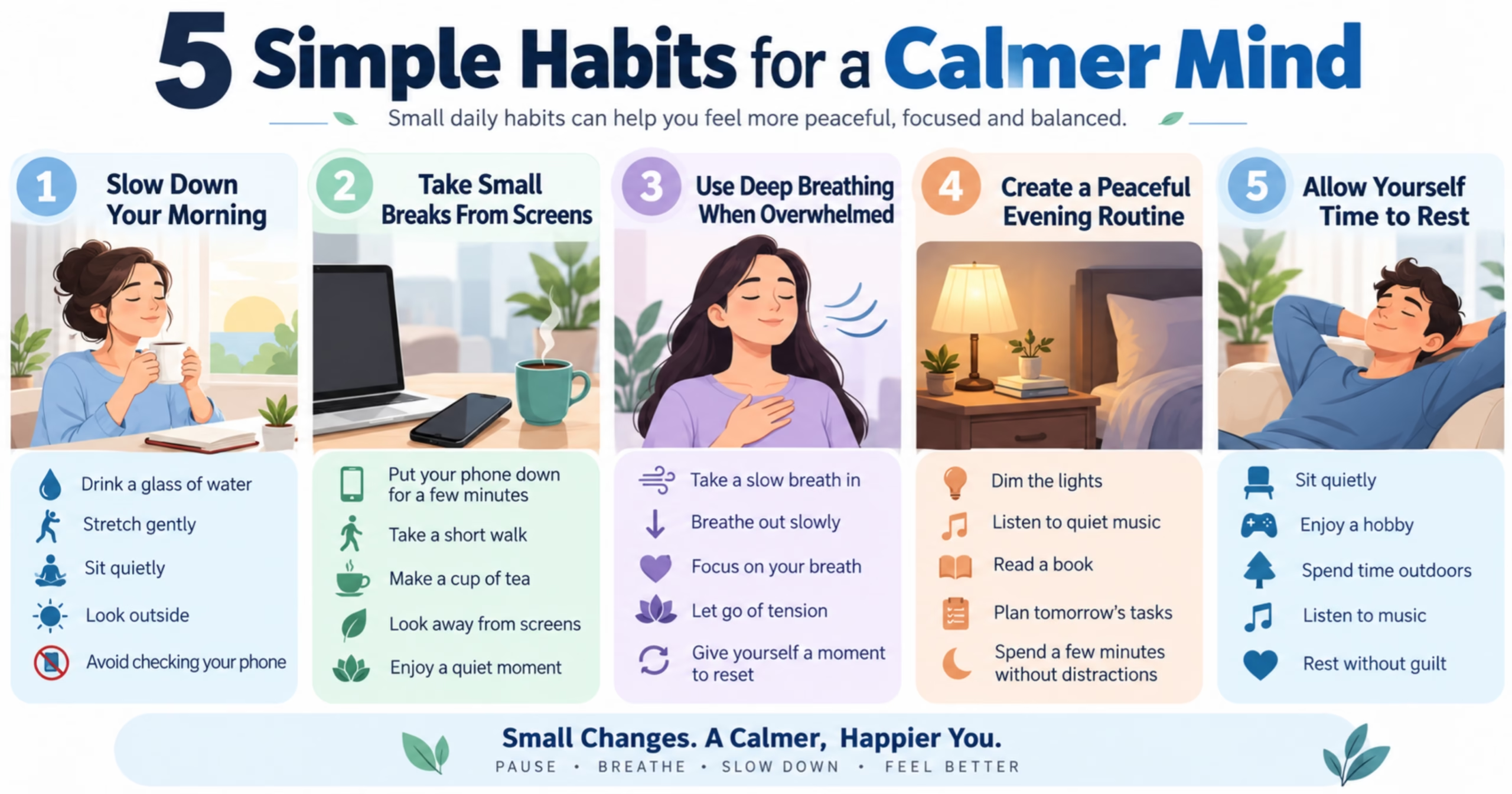
These five simple habits for a calmer mind are practical enough for busy mornings, demanding workdays, and quiet evenings at home. Start with the one that feels most relevant to your life, then build from there.
1. Start Your Morning Slowly Instead of Checking Your Phone
For many people, the first few minutes of the day begin with a phone. Before getting out of bed, they check email, scroll through social media, read the news, or respond to messages.
It seems harmless, especially when checking notifications has become automatic. However, immediately filling your attention with information can leave you feeling rushed before the day has properly started.
Imagine waking up and seeing several work messages, an unexpected bill notification, and a social media post that makes you compare your life with someone else’s. Suddenly, your mind is processing other people’s demands before you have even had breakfast.
A gentler morning routine creates a little space between waking up and responding to the outside world.
Give Yourself Five Quiet Minutes
You do not need to wake up an hour earlier or follow a complicated routine. Begin with five minutes.
After getting out of bed, open the curtains, drink some water, stretch comfortably, or sit somewhere peaceful. Pay attention to how you feel instead of immediately planning everything you need to accomplish.
You could also spend a moment looking outside, noticing the morning light, or listening to the sounds around your home.
The idea is simple: let yourself wake up before asking your attention to deal with a long list of demands.
If you have children, an early work schedule, or family responsibilities, your mornings may already be hectic. In that case, even one uninterrupted minute can be a useful starting point.
Create a Healthier Relationship With Notifications
You do not have to stop using your phone. The goal is to make your use more intentional.
Try keeping your phone away from your pillow at night. Disable nonessential notifications or wait until you finish a small morning routine before opening social media.
If you need your phone for work, childcare, or urgent family communication, keep essential alerts available. You can still check important information without automatically opening every app.
Over time, this small boundary may help reduce the feeling that you must respond to everything immediately.
Set One Intention for the Day
After your quiet moment, choose one thing you would like to approach thoughtfully.
It might be finishing an important task, taking a proper lunch break, speaking patiently during a difficult conversation, or making time for a short walk.
Keep the intention realistic. A useful intention is a reminder, not another demand you must meet perfectly.
Try this today: Spend the first five minutes after waking up away from social media and unnecessary notifications. Notice whether the morning feels less rushed.
A peaceful morning cannot prevent every difficult moment, but it can help you begin the day with greater intention instead of immediately reacting to everything around you.
2. Practice Mindful Breathing When Your Thoughts Feel Busy
Have you ever tried concentrating on one task while thinking about five other things? Perhaps you are preparing dinner while remembering an unfinished assignment, worrying about an upcoming appointment, and planning what you need to do tomorrow.
This mental busyness can make it difficult to give your full attention to the present moment.
Mindful breathing offers a simple way to pause. It involves noticing your breathing as it naturally happens and gently returning your attention to it whenever your thoughts wander.
You do not have to empty your mind or force yourself to feel relaxed. The practice is about noticing what is happening without immediately getting caught up in every thought.
A Simple Two-Minute Breathing Exercise
Choose a comfortable place where you can sit without needing to do anything else for a moment.
Follow these steps:
- Sit comfortably and allow your shoulders to relax.
- Notice the feeling of your feet resting on the floor or your body supported by the chair.
- Pay attention to your natural breathing without trying to control it.
- If it feels comfortable, breathe in gently and allow the breath out to leave slowly and naturally.
- When a thought appears, acknowledge it and return your attention to the next breath.
Continue for one or two minutes, or longer if the exercise feels helpful.
Your attention will probably wander. You may start thinking about work, remember something you forgot, or become distracted by a sound. That is normal. Rather than getting frustrated, simply notice the distraction and return to your breathing.
Each time you notice your attention wandering, you have another opportunity to practice bringing it back.
If focusing on your breathing feels uncomfortable, try noticing the sounds in the room, the feeling of your feet on the floor, or the colors of nearby objects instead.
Use Mindfulness During Everyday Activities
Mindfulness does not always require sitting still with your eyes closed.
You can practice it while washing dishes, drinking your morning coffee, walking to your car, or eating lunch.
For example, when drinking coffee, notice its warmth, aroma, and taste rather than checking your phone at the same time. While walking, pay attention to your steps and the environment around you.
These short pauses can help you shift your attention away from automatic thinking and toward what you are actually doing.
You may find it particularly helpful to pause before responding to a stressful email or entering a difficult conversation. A brief moment of awareness can give you an opportunity to consider your response instead of reacting immediately.
What If Your Mind Will Not Slow Down?
You may notice that your thoughts remain busy even when you try to breathe mindfully. That does not mean you are doing the exercise incorrectly.
Some concerns require practical action, and others may take time to work through. You do not have to resolve them during a breathing exercise.
Simply recognize that the thought is there. If it needs attention, write it down and return to it later when you have time.
Try this today: Take two mindful minutes before lunch or after finishing work. Focus on your breathing or your surroundings without expecting every stressful thought to disappear.
Mindfulness is a skill that develops through practice. Even when a session feels ordinary, the habit of pausing and noticing your attention can become a useful part of managing everyday stress.
3. Spend Time Away From Screens and Get Outside
Digital devices make many parts of life easier. They help us work, communicate with friends, learn new skills, and enjoy entertainment. Yet the constant flow of messages, videos, headlines, and updates can leave us with very little time when our attention is not being pulled in another direction.
You might finish answering emails only to start scrolling through social media. A few minutes turn into half an hour, and you finish feeling mentally tired rather than refreshed.
A deliberate screen break gives your attention a chance to move away from the constant stream of information. Spending part of that break outdoors can make it easier to notice the world beyond your devices.
Take a Short Walk Without Your Phone in Your Hand
A walk does not need to be long or physically demanding to fit into your routine. You might walk around your neighborhood, visit a nearby park, or spend a few minutes in your yard.

If going outside is not practical, walk around your home or sit near a window.
While walking, notice ordinary details. Look at the trees, the changing light, or the houses along your street. Pay attention to the sounds around you and the movement of your feet.
You do not need to turn the walk into another productivity exercise. There is no requirement to count every step, measure the distance, or achieve a particular result.
Let the activity be a break from having to respond, produce, or accomplish something.
Physical activity can also support general well-being, and a comfortable walk is an accessible starting point for many adults. Choose a pace that suits your abilities and current circumstances.
Give Your Attention a Break From Social Media
Social media can be enjoyable, informative, and helpful for maintaining relationships. The challenge is that it can also encourage frequent checking and comparison.
You may open an app to look for one message and end up watching unrelated videos for 30 minutes. You might also encounter posts that make other people’s lives seem more successful or exciting than your own.
Remember that social media usually shows selected moments, not the complete picture of someone’s life.
If scrolling leaves you feeling distracted or dissatisfied, try changing how you use it. Set a reasonable time for checking updates, mute accounts that repeatedly make you uncomfortable, or keep your phone away during meals.
You can also replace part of your usual scrolling time with an activity that feels genuinely restorative.
Choose an Offline Activity You Enjoy
A screen break is easier to maintain when you know what you want to do instead.
You could read a few pages of a book, water your plants, prepare a simple meal, listen to music, stretch, or talk with someone you care about.
These activities are not necessarily more valuable than digital entertainment. Their benefit is that they offer a different way to spend your attention.
You also do not need to avoid screens completely. Technology may be essential for work, learning, or staying connected with family. Instead, focus on creating sensible boundaries around the activities that leave you feeling mentally overloaded.
Try this today: Take a ten-minute break from your phone. Walk outside, sit somewhere quiet, or do a simple activity without checking notifications.
Notice how you feel afterward. If the break helps, look for one or two natural places in your schedule to repeat it.
4. Write Down Your Thoughts Instead of Carrying Them All Day
A busy mind often has too many unfinished tasks competing for attention.
You may need to pay a bill, prepare for a meeting, schedule a dentist appointment, reply to a friend, and buy groceries. On top of that, you may be worrying about a conversation or a decision you have not made.
When you try to remember every responsibility at once, even simple tasks can feel overwhelming.
Writing things down gives your thoughts somewhere to go. Instead of repeatedly reminding yourself about the same task, you can record it and decide when to address it.
Journaling can also help you recognize feelings that are difficult to understand while they remain in your head.
Try a Five-Minute Brain Dump
A brain dump is a simple exercise in which you write down whatever is occupying your attention.
Take a notebook, a sheet of paper, or a notes app. Set aside five minutes and write without worrying about spelling, grammar, or organization.
Your list might include:
- Tasks you need to complete.
- Questions you want to answer.
- Concerns about work or family.
- Ideas you do not want to forget.
- Feelings you have not had time to think about.
You do not need to turn the exercise into a polished journal entry. The goal is to get the thoughts out of your head and onto a page.
When you finish, read through the list without judging yourself for what you have written.
You may discover that several worries are connected to the same underlying problem. Alternatively, you may realize that some tasks will take only a few minutes to complete.
Putting things on paper can make it easier to decide what deserves your attention first.
Separate What You Can Control From What You Cannot
One of the most useful parts of writing down your concerns is identifying where action is possible.
Suppose you are worried about a presentation at work. You cannot guarantee how every person will respond, but you can prepare your notes, organize your main points, and practice beforehand.
If you are concerned about an important conversation, you may not be able to control the other person’s reaction. You can, however, decide what you want to communicate and how you would like to approach the discussion.
Write down one small next step for concerns you can influence.
For situations outside your immediate control, acknowledge the uncertainty without forcing yourself to find an answer straight away. You may need more information, time, or support before deciding what to do.
This approach is not about ignoring difficult problems. It is about spending your energy where it can be useful.
Use an Evening Reflection to Finish the Day
Journaling can also help you notice what went well, especially during weeks when your responsibilities seem endless.
At the end of the day, write down one thing you handled well, one moment you appreciated, or one small action that helped you feel more comfortable.
It could be finishing a task, sharing a conversation with a friend, preparing a good meal, or taking a break instead of pushing yourself too hard.
You do not need to pretend that every day is wonderful. Acknowledging a positive moment simply allows it to exist alongside the difficult parts of the day.
If writing about your worries makes you feel more distressed, keep your notes brief and practical, or try a different habit that feels more comfortable.
Try this today: Write down three things occupying your mind. Choose one manageable next step and decide when you will take it.
Over time, journaling may help you organize responsibilities, recognize patterns in your thoughts, and approach everyday decisions with greater clarity.
5. Create a Relaxing Evening Routine to Support Better Sleep
When the day finally becomes quiet, thoughts that were pushed aside by work and responsibilities can suddenly become more noticeable.
You might replay a conversation from the afternoon, worry about tomorrow’s schedule, or start planning the week while lying in bed. The more urgently you try to fall asleep, the more frustrating the experience can become.
A relaxing evening routine can help establish a clear transition between the day’s activities and your time for rest.
It does not need to be elaborate. The aim is to reduce unnecessary stimulation and create conditions that make winding down easier.
Establish a Simple Wind-Down Period
Choose a few activities you find calming and repeat them at a reasonably consistent time.
For example, you might take a warm shower, prepare your clothes for the next day, read a physical book, listen to gentle music, or stretch comfortably.

Try to leave some unstructured time rather than filling every minute with chores.
If work messages or stressful news keep your thoughts active, consider checking them earlier in the evening. You can also set a reminder to finish your workday, write down any unfinished tasks, and decide when you will return to them.
A clear stopping point can make it easier to stop mentally revisiting work when you are trying to relax.
Make Your Bedroom Comfortable
Your surroundings can affect how comfortable it feels to settle down for the night.
When possible, keep your bedroom quiet, dark, and comfortably cool. Consider curtains or a sleep mask if unwanted light enters the room. If noise is a problem, a fan or another suitable option may help reduce distractions.
You do not need to purchase expensive sleep products or redesign the entire room.
Simple changes, such as moving work materials away from the bed or charging your phone somewhere else, may make your sleeping space feel less connected to your daily responsibilities.
Try to avoid turning bedtime into an opportunity to catch up on emails or scroll through endless videos. If using a device is necessary, consider reducing stimulating content and giving yourself a clear stopping point.
Maintain a Reasonably Consistent Sleep Schedule
A regular sleep schedule can help support your body’s natural sleep-wake rhythm. Try to go to bed and wake up at roughly similar times, including on weekends when practical.
Most adults need at least seven hours of sleep each night, although individual needs vary. Your own sleep requirements may also depend on your age, health, and circumstances.
If your current routine is irregular, make one adjustment at a time. You might begin by choosing a consistent wake-up time or moving your evening wind-down routine slightly earlier.
Pay attention to habits that may interfere with sleep. Caffeine late in the day, alcohol, heavy meals close to bedtime, and stimulating activities may affect sleep for some people.
There is no need to follow rigid rules that do not suit your situation. Observe your own patterns and make reasonable adjustments based on what helps you rest.
What to Do When Thoughts Appear at Bedtime
It is normal for thoughts to arise when you lie down. Trying to force every thought away can sometimes make you more focused on whether you are falling asleep.
Instead, keep a notebook nearby and write down a task or concern that you want to revisit the next day. You can also gently bring your attention back to a quiet activity, such as reading, if that feels comfortable.
If you remain awake for a while and become increasingly frustrated, consider getting out of bed and doing something quiet in dim light until you feel sleepy, then returning to bed.
Persistent sleep difficulties deserve attention. If problems continue or interfere with your daily functioning, speak with a qualified healthcare professional about possible causes and suitable treatment options.
Try this today: Spend the final 20 minutes before bed on a calming activity instead of scrolling through social media. Keep it simple enough to repeat regularly.
Better sleep will not remove every source of stress, but adequate rest can help you feel better prepared to handle the demands of daily life.
How to Make These Habits Stick
Understanding what may help you feel calmer is only the first step. The real challenge is making these practices fit into your actual routine.
It is tempting to change everything at once. You might plan to meditate every morning, walk for 30 minutes, journal every evening, and stop using your phone after dinner.
That enthusiasm is understandable, but too many expectations can turn self-care into another source of pressure.
A more sustainable approach is to start small and build gradually.
Choose the Habit That Meets Your Current Needs
Think about when you most often feel mentally overloaded.
If you wake up feeling rushed, begin with a few quiet minutes before checking your phone. If your thoughts become busy during work, practice mindful breathing or take a short walk. If unfinished tasks follow you into the evening, try writing them down before you finish work.
Choose one habit that addresses a problem you actually experience. You are more likely to keep practicing something that feels relevant to your daily life.
Attach New Habits to Existing Routines
It can be difficult to remember a new activity when you have not decided when to do it.
A simple solution is to connect the habit with something you already do.
After making your morning coffee, take three comfortable breaths. After lunch, walk for five minutes. Before closing your laptop, write down tomorrow’s priorities. After brushing your teeth at night, read a few pages of a book.
These small reminders make new habits easier to remember without requiring a completely different schedule.
Make Your Routine Flexible
Some days will be more demanding than others. You may have family responsibilities, an unexpected deadline, or simply less energy than usual.
Instead of abandoning a habit because you cannot complete the full version, make it smaller.
A ten-minute walk can become a two-minute stretch. A full journal entry can become one sentence. A lengthy evening routine can become five quiet minutes.
The goal is not to maintain a perfect record. It is to create practices you can return to when life allows.
Also, remember that not every habit will suit everyone. Try different approaches and keep the ones that genuinely make your daily life feel more manageable.
When Everyday Self-Care Is Not Enough
Simple habits can support general well-being, but they cannot solve every cause of stress, worry, or low mood.
If you regularly feel overwhelmed, struggle to manage ordinary responsibilities, experience persistent anxiety, or have ongoing sleep difficulties, consider speaking with a qualified mental health professional or healthcare provider.
Professional support can help you understand what you are experiencing and identify approaches suited to your circumstances. You do not have to wait until a problem becomes severe before asking for help.
These habits can still be part of your routine, alongside appropriate support. Taking care of yourself includes recognizing when you need more than a few minutes of quiet.
Conclusion: Make Space for a Calmer Mind, One Habit at a Time
A calmer mind does not require you to eliminate every worry, become perfectly organized, or change your life overnight.
It can begin with a few quiet minutes in the morning, a mindful breathing break during a demanding day, or a short walk away from your screen. Writing down your thoughts can help organize your responsibilities, while a relaxing evening routine can give you more space to prepare for sleep.
These five habits for a calmer mind work best when they fit naturally into your everyday life. You do not need to practice all of them at once or expect an immediate transformation.
Choose one habit that feels manageable. Give it a fair opportunity, notice how it affects your day, and adjust it when necessary.
Some days will remain stressful, and that is part of being human. What matters is developing practical ways to pause, understand what you need, and respond to challenges without placing unnecessary pressure on yourself.
A peaceful routine is built through ordinary moments, repeated when possible. Sometimes, a small change in how you begin the morning, spend a break, or end the evening is a meaningful place to start.
3 thoughts on “5 Simple Habits for a Calmer Mind: Easy Ways to Feel More Peaceful Every Day”