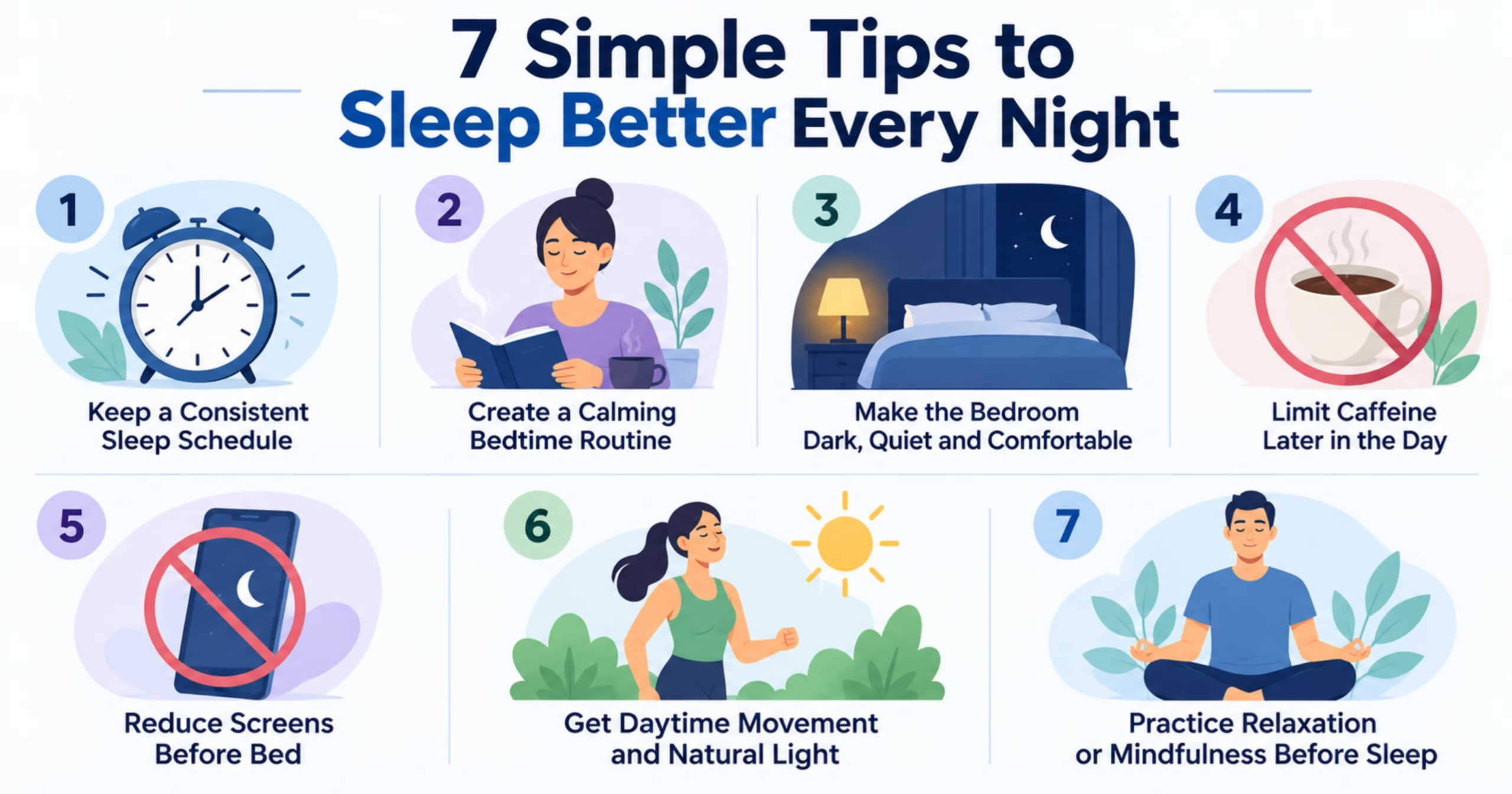
7 Simple Tips to Sleep Better Every Night
Have you ever gone to bed feeling completely exhausted, only to find yourself staring at the ceiling an hour later? Or maybe you fall asleep quickly but wake up several times and feel tired again in the morning. Poor sleep can make even a normal day feel harder than it should.
The good news is that better sleep does not always require a complicated routine or expensive products. Small, consistent changes to your schedule, evening habits, and bedroom environment can make a meaningful difference. The goal is not to create a perfect bedtime routine overnight. It is to make sleep easier for your body and mind, one habit at a time.
For most adults ages 18–60, health experts recommend getting at least seven hours of sleep per night on a regular basis. Sleep needs can vary with age and individual circumstances, so the quality and regularity of your sleep matter too.
Below are seven practical tips to sleep better every night. They are simple enough to fit into a busy American lifestyle, whether you work from home, commute to an office, care for a family, or spend long hours on your phone or computer.
1. Keep the Same Sleep and Wake Schedule
One of the most effective ways to improve your sleep is surprisingly simple: go to bed and wake up around the same time each day.
Your body follows an internal sleep-wake rhythm that responds to daily patterns. When your bedtime and wake time constantly change, your body has a harder time knowing when to feel alert and when to feel sleepy. A regular schedule can make it easier to fall asleep and wake up naturally. The National Heart, Lung, and Blood Institute recommends keeping your sleep schedule consistent, including on weekends, with only a small difference when possible.
That does not mean you have to go to bed at exactly 10:00 p.m. every night. The important part is consistency.
For example, imagine you normally wake up at 6:30 a.m. for work. If you stay up until 1:30 a.m. on Friday and Saturday and sleep until 10:30 a.m., waking up at 6:30 on Monday may feel much harder. Instead, try keeping your weekend schedule reasonably close to your weekday routine.
Make your schedule realistic
Choose a bedtime that gives you enough opportunity for sleep without forcing yourself into bed hours before you feel tired.
A simple approach is:
- Pick a consistent wake-up time.
- Count backward to create enough time for sleep.
- Start your wind-down routine about 30–60 minutes before bed.
- Keep your weekend schedule reasonably close to your weekday schedule.
Do not worry if your schedule is currently inconsistent. You can adjust it gradually rather than changing everything in one night.
2. Create a Calm, Comfortable Bedroom
Your bedroom should make sleep feel easier, not encourage you to stay awake.
A room that is bright, noisy, hot, or filled with distractions can make it harder to settle down. The NHLBI recommends keeping the bedroom cool, quiet, and dark.
Take a look around your room from the perspective of someone trying to sleep. Is your phone glowing beside your pillow? Is the television playing in the background? Is street light coming through the window? Is the room warmer than you would like?
Sometimes the solution is surprisingly practical.
You might use blackout curtains if outdoor light bothers you. A fan or white-noise machine may help mask inconsistent sounds. If your mattress or pillow is uncomfortable, improving your sleep surface may also make your bedtime more pleasant.
The goal is not to create a luxury hotel room. It is simply to remove the things that repeatedly pull your attention away from sleep.
Keep the bedroom associated with rest
Many people use their beds for everything: working, watching television, scrolling social media, answering emails, and eating snacks. When possible, make the bed primarily a place for sleep and relaxation.
This can create a stronger mental connection between getting into bed and winding down.
Even small changes can help. Put your laptop away before bedtime. Keep your workspace separate from your sleeping area when possible. Dim harsh lights in the evening. Make your bed comfortable and uncluttered.
A peaceful room can act as a visual reminder that the day is ending.
3. Give Your Brain Time to Wind Down
Going directly from a stressful workday to bed can make falling asleep surprisingly difficult.
You may physically lie down, but your mind is still working through emails, tomorrow’s responsibilities, conversations, bills, or unfinished tasks. That is why a short wind-down period can be so useful.
Instead of treating bedtime as a single moment, think of it as a transition.
About 30–60 minutes before bed, gradually move from stimulating activities toward quieter ones. The NHLBI suggests using the hour before bed for quiet time and avoiding bright artificial light or intense activity close to bedtime.
A calming routine might include:
- Taking a warm bath or shower
- Reading a few pages of a book
- Listening to calm music
- Doing gentle stretching
- Practicing slow breathing
- Writing down tomorrow’s tasks
- Sitting quietly with a cup of a non-caffeinated drink
You do not need to do all of these. Choose one or two things you genuinely enjoy.
Give yourself permission to stop being productive
This may sound obvious, but many people struggle with it.
Late at night, there is often a temptation to finish one more email, clean one more room, or watch one more video. Your brain stays in “day mode,” and suddenly it is midnight.
Try setting a personal cutoff point. When the cutoff arrives, your job is no longer to accomplish things. Your job is to prepare for rest.
That mental shift can be surprisingly helpful.
4. Be Careful With Caffeine, Alcohol, and Late-Night Eating
Your evening food and drink choices can influence how easily you fall asleep and how comfortable you feel during the night.
Caffeine is one of the biggest things to watch. Coffee is the obvious source, but caffeine is also found in tea, energy drinks, soda, chocolate, and some medications. The effects of caffeine can last for hours, so a late-afternoon or evening coffee may affect sleep even if you do not feel particularly stimulated by it. NHLBI notes that caffeine’s effects can last up to about eight hours in some people.
You do not necessarily have to give up caffeine completely. Instead, pay attention to timing.
For example, if you usually drink coffee at 4:00 p.m. and have trouble sleeping at 10:00 p.m., try moving your last caffeinated drink earlier for a week and see whether anything changes.
Alcohol can also be misleading. Some people feel sleepy after drinking, but alcohol can result in lighter, less restful sleep and more awakenings during the night.
Large meals immediately before bed may also leave you feeling uncomfortable. A light snack can be fine for many people, but heavy meals close to bedtime are worth avoiding.
Think about patterns, not perfection
You do not need to become obsessive about everything you eat after 6:00 p.m. Sleep habits should be practical enough to maintain.
Instead, notice patterns.
If a big late dinner leaves you uncomfortable, eat earlier when possible. If evening caffeine keeps you awake, cut it back. If alcohol seems to make you wake during the night, consider reducing it or avoiding it close to bedtime.
The best routine is the one that fits your life and helps you consistently sleep better.
5. Put Your Phone Down Before Bed
For many people, the hardest sleep habit to change is also the most familiar: scrolling on the phone in bed.
A quick look at social media can turn into 45 minutes of videos, messages, news, shopping, or emails. Even when you are physically tired, your brain remains engaged.
Bright light from screens can also interfere with your body’s natural sleep-wake signals, particularly when you are exposed to it late at night. NHLBI recommends using the period before bed as quieter time and reducing bright artificial light.
You do not have to completely eliminate technology from your life. Instead, create some distance between screen time and sleep.
Try putting your phone away 30 minutes before bed. Charge it across the room rather than beside your pillow. Turn off unnecessary notifications. Use Do Not Disturb or a similar setting so messages are not pulling you back into the day.
If you use your phone as an alarm, that is still possible without keeping it in your hand until you fall asleep.
Replace scrolling with something intentional
Removing your phone creates an empty space. Fill that space with something relaxing.
Read a paperback book. Listen to quiet audio. Stretch for five minutes. Prepare your clothes for tomorrow. Write down anything that is worrying you so you do not have to keep replaying it in your head.
The replacement matters because simply telling yourself, “I won’t use my phone tonight,” may be harder than giving yourself a clear alternative.
6. Get Daylight and Move Your Body During the Day
Better sleep is not only about what happens after sunset.
Your daytime habits also matter.
Spending time outside during the day gives your body exposure to natural light, which helps regulate your sleep-wake cycle. Regular physical activity can also support healthy sleep. NHLBI recommends spending time outdoors when possible and staying physically active during the day.
This does not mean you need an intense workout program.
A brisk walk around your neighborhood, a morning walk with your dog, cycling, swimming, strength training, or a regular gym session can all be ways to stay active.
What matters most is consistency.
A simple daytime routine
Consider making these small habits part of your day:
Get outside for some natural light, especially earlier in the day when practical.
Add movement to ordinary activities. Walk during a phone call, take the stairs, or go for a short evening walk.
Exercise regularly, but pay attention to timing. Some people sleep well after evening exercise, while others find intense workouts too close to bedtime stimulating. NHLBI advises avoiding exercise very close to bedtime if it interferes with falling asleep.
The bigger idea is this: sleep at night is connected to how you spend your day.
7. Do Not Turn Sleep Into a Performance Test
One of the most frustrating things about sleep is trying too hard to make it happen.

You get into bed and think, “I have to fall asleep now.” Then you check the clock. Twenty minutes pass. You check again. You calculate how many hours remain before your alarm. The pressure increases, and your mind becomes even more alert.
Worrying about sleep itself can contribute to insomnia or make it worse, according to NHLBI.
Instead of judging every night, look at your overall pattern.
One restless night does not mean something is wrong. You may have eaten late, experienced stress, traveled, changed your schedule, or simply had an unusually difficult day.
If you are awake and frustrated, stop treating the bed like a place where you have to win a competition. Keep the lights low, do something quiet and relaxing for a while, and return to bed when you feel sleepy.
The purpose is to reduce the mental struggle around sleep.
Stop checking the clock repeatedly
If you frequently wake up at night, consider turning the clock away from you.
Knowing that it is 2:47 a.m. and your alarm is set for 6:30 does not necessarily help you sleep. For many people, it simply creates another reason to worry.
Protecting your peace of mind can be just as important as adjusting the physical environment.
A Simple Bedtime Routine You Can Try Tonight
You do not have to adopt all seven habits immediately. Start with a routine that feels realistic.
For example, if your target bedtime is 10:30 p.m., you could begin winding down around 9:45.
At 9:45, finish work and put your laptop away.
At 10:00, dim the lights and stop scrolling on your phone.
At 10:05, take a warm shower or wash up and change into comfortable sleepwear.
At 10:15, read a few pages of a book or listen to quiet music.
At 10:25, get into bed and take a few slow breaths.
At 10:30, turn out the lights.
The exact times do not matter. What matters is creating a sequence your brain begins to recognize.
After repeating the same pattern regularly, the routine can become easier and more automatic.
What If You Still Cannot Sleep?
Healthy sleep habits can help, but they are not a cure for every sleep problem.
If you regularly have trouble falling asleep, staying asleep, waking too early, or feeling excessively sleepy during the day, it may be worth speaking with a healthcare professional. Persistent sleep problems can sometimes be connected to insomnia, sleep apnea, medications, mental health concerns, or other underlying issues.
You should also take daytime sleepiness seriously, particularly when it affects driving, work, or other activities that require attention.
Keeping a simple sleep diary can be useful when discussing ongoing problems with a healthcare professional. You can record when you went to bed, when you woke up, nighttime awakenings, naps, caffeine use, and how rested you felt the next day.
The purpose is not to become obsessed with numbers. It is to help identify patterns that may be easy to miss from memory alone.
Final Thoughts
Learning how to sleep better every night is usually less about finding one perfect trick and more about creating conditions that support healthy sleep.
Start with the basics: keep a consistent schedule, make your bedroom comfortable, give your mind time to slow down, watch your caffeine and alcohol timing, put your phone away before bed, stay active during the day, and avoid turning sleep into something you have to force.
You do not have to change your entire lifestyle tonight.
Choose one habit that feels easy enough to start now. Maybe that means moving your phone away from the bed. Maybe it means waking up at the same time tomorrow morning. Maybe it means taking a few quiet minutes to relax instead of squeezing one more task into the evening.
Small changes become much more powerful when you repeat them consistently.
A good night’s sleep should not feel like a luxury reserved for weekends. With a little structure and patience, it can become a regular part of your everyday routine.
4 thoughts on “7 Simple Tips to Sleep Better Every Night”